
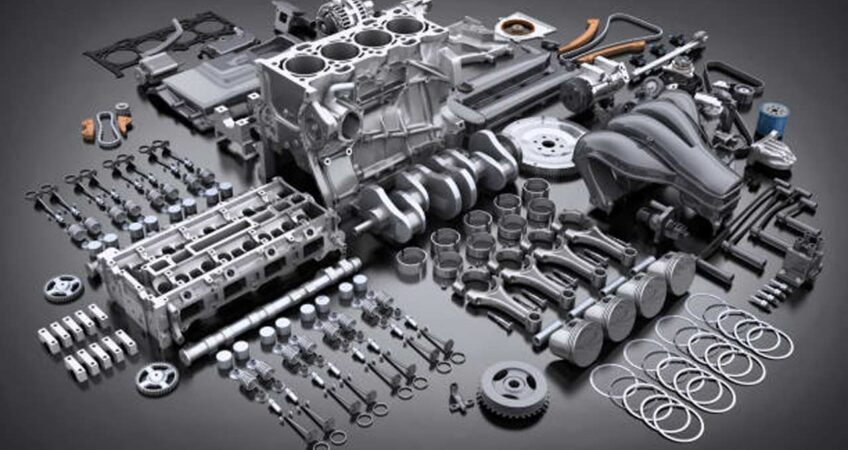
Saving fifteen percent on an engine part seems like a great deal until that part turns out to be the reason your engine breaks down for a week and the repair bill ends up being a large sum.While genuine engine parts cost more upfront than counterfeit or unverified aftermarket options, the real comparison isn’t just about the price of a single purchase.It’s about the total cost of ownership, which includes the cost of the part, labor, downtime, and the risk of damage spreading to other parts of the engine over time.Once you consider all these factors, genuine parts usually prove to be more cost-effective for anything beyond the lowest-risk wear parts.
This article explains why genuine parts help maintain long-term engine efficiency, how counterfeit and unverified parts can slowly reduce that efficiency in ways that aren’t always obvious right away, and how to think about the total cost of ownership before making a parts decision.
What “Genuine” Actually Means, and Why It’s Not Just a Label
A genuine engine part is made to the exact specifications, materials, and tolerances of the original component, whether it’s made directly by the original equipment manufacturer (OEM) or through a properly licensed manufacturer. This is important because engine performance depends on the precise interaction between parts even small differences, like a piston ring with slightly different clearance or a fuel injector with a slightly different spray pattern, can lead to a slow decline in performance that may not be noticeable right away.These differences often result in a gradual, measurable loss of efficiency that an operator might not connect back to the part until much later.
This is different from counterfeit parts, which is a separate and more serious issue.Counterfeit parts are made to look like genuine or OEM-equivalent parts when they are not, and they often lack proper quality control, testing,or adherence to original specifications. A counterfeit part might look correct, install without problems, and even run for a while but it carries a much higher risk of early failure, often at the worst possible time.
How Non-Genuine Parts Quietly Erode Efficiency
Efficiency loss from a lower-quality part doesn’t usually show up as a dramatic, obvious failure right away. More often, it shows as a slow decline that’s easy to miss until the effect becomes significant. Combustion efficiency drift.Components like fuel injectors, spark plugs, and ignition modules that don’t match original specifications can lead to slightly inconsistent combustion, which results in higher fuel consumption for the same level of performance.An engine using more fuel than its rated efficiency isn’t necessarily broken it may simply be running on parts that don’t meet the exact tolerances the engine was designed for.
Increased wear on adjacent components. A part that’s not made to the correct tolerances doesn’t just perform poorly on its own it can also speed up wear on the parts around it.A piston ring with imprecise clearance can cause faster wear on the cylinder liner; a bearing with marginal tolerances can put more stress on the crankshaft.This is one of the more expensive and hard-to-spot costs of using non-genuine parts, since the damage appears in components that weren’t the ones replaced.
Reduced service intervals. Engines running on non-genuine components often require more frequent maintenance than those using genuine parts, since the wear patterns don’t match what the engine’s maintenance schedule was designed for.More frequent service means higher labor costs and more downtime over the engine’s lifespan, even if there’s no major failure.
Compounding electronic and control system issues. In engines with electronic systems, non-genuine sensors or control modules can give incorrect data to the engine’s control system, leading to suboptimal fueling or timing adjustments.These problems are hard to diagnose because the actual cause a faulty sensor is far removed from the symptom an operator notices.
The Total Cost of Ownership Math
This is where the real value of genuine parts becomes clear.Imagine a simple but realistic situation: a fake or untrusted part for a fuel system might cost about 15% less than the real one. On its own, that seems like a small saving.However, if that part breaks early — because it was made with poor quality, bad materials, or wasn’t made to handle the engine’s real conditions the extra costs that come after can be way bigger than the original saving.
If a major problem happens because of a bad part, the engine could be out of action for days or weeks while a new one is found and installed. This can cause damage to other parts that didn’t fail on their own, plus expensive emergency labor and rush shipping fees that are much higher than usual. Also, there’s the cost of not being able to operate or produce during the repair time. For engines that are important for key operations like gas stations, backup power systems, or essential production equipment this kind of unexpected breakdown can cost tens of thousands of dollars once all the costs are added up, compared to the few hundred dollars saved on the part itself.
This is the main idea behind thinking about the total cost of ownership: the price you see on a part is just one part of a much bigger cost picture.For parts that have a real risk of failing, that initial price is often the smallest part of the overall cost.
Where the TCO Case for Genuine Parts Is Strongest Not all parts carry the same level of risk, so the choice between genuine and alternative parts isn’t the same for every part in an engine. Parts with high risk and serious consequences such as fuel injectors, turbochargers, ignition and electronic control modules, and precision bearings have the strongest case for using genuine parts.
These parts are crucial because even a small variation in their manufacturing can lead to major performance or reliability issues. If these parts fail, it can cause more damage than just the original part. Parts with lower risk that are easy to check like filters, belts, and common gaskets have a weaker case for sticking to genuine parts. A good quality aftermarket part from a reliable manufacturer can perform well and reduce costs without increasing the total cost of ownership significantly. Parts that are important for safety such as governors, actuators, and parts involved in engine protection functions should always be genuine.
The cost of failure with these parts goes beyond money since they are key to preventing serious mechanical problems.
A Real-World Total Cost of Ownership Comparison
| Factor | Genuine Part | Counterfeit/Unverified Part |
|---|---|---|
| Upfront cost | Higher | Lower |
| Manufacturing tolerance confidence | High – matches factory spec | Unknown or unverifiable |
| Combustion/fuel efficiency impact | Neutral – matches engine design intent | Often reduces efficiency over time |
| Adjacent component wear risk | Low | Higher |
| Failure consequence exposure | Standard warranty-backed risk | Uninsured risk of serious failure |
| Realistic 5-year total cost | Predictable | Often higher even with lower initial price |
The only area where non-genuine parts have an advantage is upfront cost. Every other factor in the total cost of ownership picture usually supports using genuine parts, especially for parts where failure can mean major problems.
Applying This Logic Without Spending Too Much
Total cost of ownership isn’t a reason to buy every part genuine, no matter the risk. That would be wasting money on parts where the cost difference isn’t significant.It’s a way to spend money where it really matters for avoiding serious risks.
Rank parts by how serious the consequences are, not just by cost. Before going for the cheapest option, think about what happens if this part fails early. High-consequence parts are worth focusing more on using genuine parts, even if they cost more.
Check the sourcing, not just the claims. A supplier who can explain clearly how a part was verified to be genuine or properly made to match the original equipment manufacturer’s standards is much safer than someone who just labels a part as genuine without a clear source.
Track problems related to each part type. Keeping a record of which parts have caused issues over time gives a more accurate picture of where using genuine parts really helps avoid real risks, instead of just relying on general industry beliefs.
Don’t let the upfront cost decide the choice. The biggest mistake in buying parts is treating the price on the invoice as the total cost. Considering downtime costs, repeat failures, and chain reactions changes how the choice is made for parts beyond regular wear items.
Getting Genuine Parts That You Can Actually Confirm
JawaidEnterprises provides genuine and properly verified parts that match original equipment manufacturer standards for engines and generators from major industrial brands. Their sourcing is traceable and helps protect against counterfeit parts that can harm efficiency and total cost of ownership over time. For especially high-consequence parts like fuel systems, ignition, and control electronics, this verification is not just a formality it makes the difference between predictable maintenance costs and unexpected, serious failures.
Frequently Asked Questions
How much more do genuine engine parts usually cost compared to aftermarket alternatives?
The cost difference varies by part and manufacturer, but it’s most noticeable with precision parts like fuel injectors, turbochargers, and control electronics.For regular wear items such as filters and belts, the price difference between genuine and quality aftermarket parts is often much smaller.
Can a fake part really lead to tens of thousands of dollars in damage?
Yes, especially when it’s a key part that, if it fails, causes damage to other systems or stops equipment that is needed for important operations.The total cost isn’t just for the broken part—it also includes labor, rush shipping, damage to nearby parts, and the loss of productivity while the equipment is down.
Is every part sold by third-party suppliers a fake?
No. High-quality parts made by trusted companies that are similar to original equipment manufacturer (OEM) parts are a real and often cheaper option, especially for parts that wear out over time and don’t pose a big risk.The risk comes from fake or unapproved parts that pretend to be something they are not, not from genuine third-party parts that are properly made.
How can I know if a supplier is really selling real parts?
Ask how they check where the parts come from, whether they can show you the whole journey from manufacturing to delivery, and if the parts have a warranty from the maker. A supplier who can clearly answer these questions is more likely to be trustworthy than one that just says the parts are real.
Which engine parts are most important to get from genuine sources?
Parts like those in the fuel system, turbochargers, ignition and control systems, and safety parts like governors and actuators are most important to get from real sources.Failures in these parts can lead to bigger and more expensive issues.
Protect Your Engine’s Efficiency and Total Cost of Ownership
The real cost of an engine part isn’t just what you pay upfront—it’s what happens over time, including the risk of failure. Jawaid Enterprises can help you find real and verified engine parts that protect your engine’s long-term performance and overall cost, with sourcing you can check rather than just trust.Send us your engine details and part needs for a simple quote.