
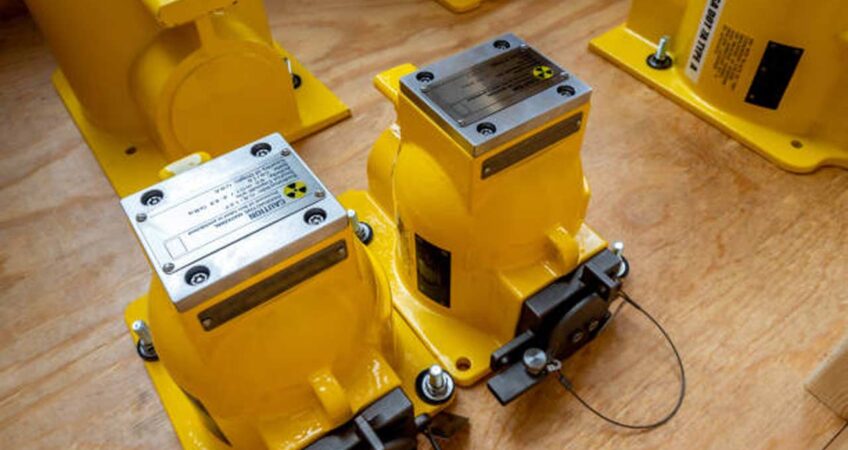
Woodward recently discontinued production of its SG governor, the mechanical-hydraulic droop governor for diesel and gas engines since the 1940s, a reality every operator still maintaining the governor must face as they balance a diminishing spare parts pool for a critical engine regulation component. This consideration underlies a series of retrofit projects to upgrade legacy mechanical Woodward actuators to modern digital electronic control, and knowing the basis for the change helps determine if it applies to your equipment. This guide covers what changes as mechanical Woodward actuators such as the SG, PG, and UG-series are retrofitted to digital electronic control, considerations for a mechanical-to-digital actuator retrofit, and the value drivers to make a retrofit case for your application.
Why Mechanical Governors Are Reaching the End of Their Practical Life
Woodward’s classic mechanical-hydraulic governors, such as the SG, PG, UG-25+, and similar platforms, controlled the speed of engines for decades using flyweights and hydraulic pistons to directly sense and correct speed, without a role for any electronic components in the core control loop. This made the mechanical governors exceptionally robust and self-contained, which in turn makes many such units still in use, regulating the speed of engines that are otherwise in good working order.
While Woodward has explicitly discontinued production of the SG governor for the indefinite future, encouraging customers to pursue mechanical upgrade paths or full electronic governing systems using the EG-3P actuator platform, this does not mean that existing units are instantly obsolete. Rather, it means that the parts supply for these mechanical governors will dry up over time, and it makes proactive retrofit planning desirable to avoid being caught unprepared.
Mechanical governors also have practical limitations that electronic actuation does not. Mechanical response time is governed by flyweight movement and hydraulic dynamics, response characteristics are generally fixed to the mechanical design of the unit, and remote monitoring or adjustment is impossible without additional equipment, since the mechanical governor itself does not report its own status electronically.
What Changes When You Retrofit to Digital Control
Changing from a mechanical to a digital electronic actuator represents a fundamental shift in how speed control is accomplished, and knowing where the change occurs helps identify the value drivers for the change.
Electronic speed sensing replaces mechanical flyweight speed sensing in a digital electronic actuator. Electronic sensing systems use a magnetic pickup (MPU) to electrically sense engine speed, and a digital controller calculates the appropriate correction and applies it to an actuator for speed control. Electronic speed sensing is more accurate and configurable than mechanical flyweight speed sensing because the control function is implemented digitally.
Proportional actuators respond to a control signal. Modern electronic actuators position the fuel rack or linkage of the engine in a proportion to an electrical signal (typically a 20-160 mA proportional signal) instead of a direct mechanical linkage as used in a flyweight governor. This provides much greater flexibility in response characteristic, with different gain and damping profiles than a fixed mechanical design allows.
Configuration is done in software rather than mechanically as in a mechanical governor. The droop or response characteristics programmed into a digital electronic governor are more easily adjusted by changing the value of a parameter in the software than mechanically adjusting a governor’s characteristics.
The Case for a Hybrid Retrofit: EGB Actuators
For operators who are concerned about losing the mechanical reliability entirely, Woodward offers its EGB electronically controlled actuator with mechanical governor backup as a middle ground option to consider prior to committing to a fully electronic-only retrofit.
The EGB actuator acts as two governors in one, as an electric actuator plus a digital or analog electronic control system provide the primary governing function while an internal mechanical governor section is connected as a backup which is set to open up the fuel rack to maximum in the event that the electric governor fails in a manner that would cause an overspeed condition to occur. The mechanical governor section is usually set to trigger its fuel rack opening linkage at a speed several percent above the electric governor’s normal operating point, and thus only intervenes in the case of a complete electronic failure leading to the possibility of an overspeed event.
A hybrid mechanical/electronic EGB governor arrangement provides operators with many of the benefits of digital control – precise, software-configurable response, ability to work with modern control and monitoring systems – while maintaining a mechanical failsafe governor which does not rely on the same components as the primary electronic governing system. For critical applications where the consequences of a control system failure are significant, this hybrid approach is often the more conservative retrofit option than a fully electronic actuator with no mechanical backup.
The Retrofit Process: What to Expect
A retrofit from mechanical to digital control is not a simple one-for-one component replacement but a controls upgrade that touches several areas.
Engine-specific configuration review. A preliminary review with an applications engineer to discuss the configuration of the mechanical governor being retrofitted and review any engine-specific settings ensures that the retrofit components will be properly configured to match your engine’s requirements and not a generic set of defaults.
Actuator selection based on work capacity. Electronic actuator options cover a broad work capacity range, and ensuring that an appropriately sized actuator is chosen for your engine’s fuel system demands is just as important in a digital retrofit as it was when selecting the original mechanical governor.
Controller and MPU installation. The retrofit normally requires a magnetic pickup for speed sensing, if not already present, and the digital controller itself, which serves as the decision-making system in place of the mechanical governor’s flyweight.
Hydraulic or electric actuator installation. Depending on the retrofit options selected, this may involve installing a new electric or electro-hydraulic actuator in place of the original mechanical-hydraulic unit, taking care to match mounting and linkage connection points with the existing engine.
Configuration and commissioning. The retrofit components must be configured with appropriate gain, droop or isochronous settings, and safety margins, and then commissioned to ensure stable performance within the engine’s operating range before returning the engine to service.
ROI Factors: Where the ROI Argument Actually Comes From
Retrofitting is not a retrofit for the sake of it, and the ROI case for a retrofit considers several factors that may be specific to your application.
Reduced mechanical wear over time. The reduced constant loading on mechanical linkage points of a digital actuator can reduce certain categories of wear as compared to a mechanical governor’s constantly engaged flyweight and hydraulic piston assembly, though the wear comparison is highly dependent on the design of the particular digital actuator in use.
Improved response consistency. Software-defined response characteristics do not drift as mechanical components can as they undergo wear, and a properly-maintained digital system tends to maintain its performance characteristics better over time than a mechanical governor subject to gradual wear in its flyweight and hydraulic components.
Remote monitoring and diagnostic capability. A digital system is normally able to integrate with other plant monitoring and control systems in ways a purely mechanical governor is not, providing visibility into the governor’s performance and status which can aid in predictive maintenance instead of relying on a purely reactive approach.
Parts availability for the long term. With the discontinuation of legacy platforms such as the SG governor, retrofitting to currently supported digital platforms protects against a future parts availability crisis for mechanical components which are no longer in production.
Reduced field service complexity for remote installations. A digital system that supports remote speed adjustment and configuration can save a trip to a remote installation for adjustments which would require a mechanical governor to be serviced on-site.
Comparing Mechanical and Digital Actuator Characteristics
Mechanical governors and digital electronic actuators control engine speed through different sensing, adjustment, and monitoring methods. The comparison below highlights their operational differences and maintenance considerations.
| Comparison Factor | Mechanical Governor (SG / PG / UG) | Digital Electronic Actuator |
|---|---|---|
| Speed Sensing | Uses mechanical flyweight-based speed sensing | Uses electronic speed signals, commonly from a magnetic pickup (MPU) |
| Response Tuning | Mechanically determined and generally more difficult to adjust | Software-configurable gain and response settings |
| Remote Monitoring | Not natively supported | Can support remote monitoring through digital control integration |
| Parts Availability | Availability may be limited for discontinued platforms, such as certain SG models | Depends on the actuator model and current manufacturer support |
| Failsafe Option | Self-contained mechanical operation | Hybrid options, such as EGB designs, can provide mechanical backup |
When Retrofitting Makes the Most Sense
A retrofit project is best justified when your engine’s mechanical condition is sound but the governor is on a discontinued platform, if your operation would benefit from remote monitoring or configuration flexibility a mechanical governor cannot provide, or your application’s precision requirements have exceeded the range of a mechanical governor’s fixed response characteristic. For applications where mechanical simplicity and self-contained operation remains a priority, and existing mechanical governor parts support is adequate, the case for a retrofit is not as clear-cut, but the long-term parts availability trend is still an important consideration to plan ahead.
Sourcing Retrofit Components for Your Woodward System
Jawaid Enterprises provides genuine Woodward digital actuators, EGB hybrid units, controllers, and MPU components for operators looking to retrofit from mechanical to electronic speed control. Matching actuator work capacity to your engine, and determining a fully electronic system versus an EGB hybrid unit with mechanical backup, are the early decisions which determine how well your retrofit performs once commissioned.
Frequently Asked Questions
Why is Woodward phasing out mechanical governors like the SG?
Woodward has discontinued production of the SG governor specifically, directing customers towards mechanical upgrade paths or full electronic governing systems as the company has shifted its product development towards digital control platforms over the last several decades.
Do I lose mechanical reliability by switching to a digital Woodward actuator?
Not necessarily, with Woodward’s EGB actuator line combining electronic control with a built-in mechanical governor backup, providing a hybrid approach which retains a mechanical failsafe while providing the configuration flexibility and precision of digital control.
How long does a typical mechanical-to-digital actuator retrofit take?
Timeline varies by application complexity, but the retrofit process generally includes configuration review, component selection, physical installation of the actuator and MPU, and a commissioning phase to verify stable performance, which together represents a more involved project than a simple parts swap.
Is a digital actuator retrofit worth it if my mechanical governor still works fine?
It depends on your specific priorities, but retrofitting proactively before a mechanical governor fails avoids being forced into an emergency decision later, especially for discontinued platforms.
What’s the difference between a fully electronic actuator and an EGB hybrid unit?
A fully electronic actuator relies entirely on the digital control system for governing function, while an EGB hybrid unit combines electronic control as the primary function with a mechanical governor backup which automatically takes over if the electronic system fails, providing an additional layer of safety.
Modernize Your Engine’s Speed Control With the Right Retrofit Path
Retrofitting from a legacy mechanical Woodward governor to digital electronic control is a meaningful upgrade but identifying the correct actuator, controller, and configuration determine if that upgrade will deliver on the promise of improved response and reduced long-term risk. Jawaid Enterprises can help you source genuine Woodward digital and hybrid actuator components for your retrofit project. Send your engine and current governor details for a straightforward retrofit recommendation.