
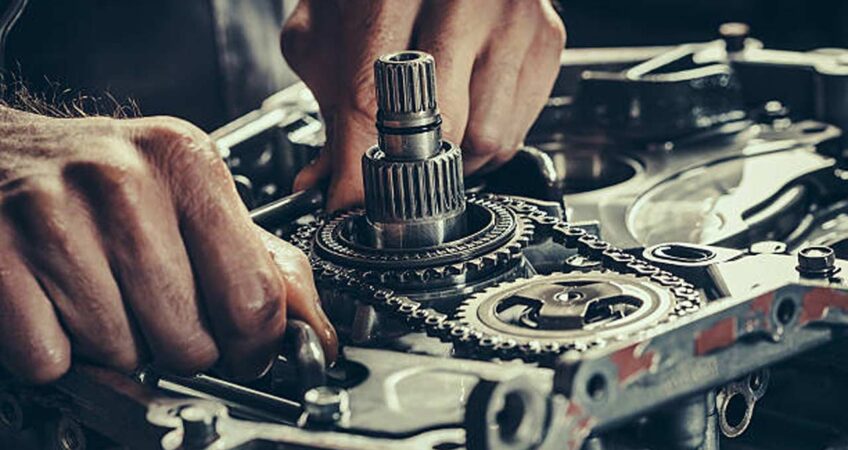
Engines that rack up the most hours don’t get there by chance. They last because a disciplined preventive maintenance plan swaps out critical components before normal wear turns into a breakdown. Whether it’s a Caterpillar genset, a Waukesha compressor, or an Ariel-driven package, the same rule applies: the majority of catastrophic failures begin with a wear item that missed its scheduled replacement.
Staying in front of problems isn’t about guessing; it’s about knowing which parts to change at specific hour intervals. This guide provides a practical hour-by-hour PM checklist, ties the appropriate maintenance parts to each interval, and explains purchasing factors that keep your preventive program from becoming a new source of downtime.
Why hours of operation outweigh the calendar
Engines age with use, not with birthdays. A backup generator that runs 50 hours a year and a compressor engine that sees near-constant duty may be the same age on paper, but their wear profiles are worlds apart. That’s why OEMs tie maintenance intervals to run-time hours instead of months, and why a precise hour meter and disciplined logging are among the most valuable and overlooked tools in any preventive maintenance program.
Ignoring this difference is expensive and risky. Calendars-only servicing leads either to throwing away life on parts that aren’t due, or, worse, letting a high-hour machine blow past its service window because the date hasn’t arrived. Reliable hour tracking is the bedrock on which the rest of this guide is built.
250 hours: a smart look for early wear
At around 250 hours, the goal isn’t major replacements — it’s finding the first hints of wear before they turn into big bills. This window is most relevant for fresh builds or recently overhauled engines, where verifying that components are bedding in properly matters as much as routine upkeep.
What to do at this point:
- Change engine oil and filter: the first post break‑in change flushes out manufacturing residue and initial wear particles.
- Check fuel filters: look for early contamination, especially if fuel quality varies.
- Inspect belts and hoses: verify condition and correct tension; issues from break‑in often show up here.
- Verify coolant level and health: watch for early leaks or contamination.
- Pull an oil sample: establish a baseline for wear metals so you can track trends at future intervals.
Why it matters:
A baseline oil analysis at 250 hours makes later comparisons meaningful, helping you spot abnormal wear patterns long before they become noticeable in operation.
The 1,000-hour mark: the backbone of scheduled preventive care
By the time an industrial engine reaches roughly 1,000 operating hours, it has typically settled into a consistent service cadence. This milestone aligns with the central phase of most OEM maintenance programs and is when a wider range of serviceable components usually require attention.
What to service or inspect now:
- Replace engine oil and the oil filter; plan to repeat this at each subsequent 1,000-hour interval
- Swap fuel filters and drain/clean water separators
- Check air filters and either clean or replace them based on how dusty the operating conditions have been
- For spark-ignited engines, inspect spark plugs for condition and gap; for diesels, check glow plugs
- On gas engines, examine ignition parts such as coils and modules for early signs of performance drift
- Install new gaskets for any covers or housings you open; reusing old gaskets often leads to avoidable leaks
- Reassess belt condition and tension; replace belts showing glazing, cracks, or other deterioration
- Evaluate the cooling system, including thermostat operation and the state of hoses
This is also a good time to compare your current oil analysis results with the 250-hour baseline. A smooth, predictable trend in wear metals suggests normal operation. A sudden increase in a particular element can indicate a developing fault rising iron, for instance, may signal cylinder or ring wear — well before any noise or visible symptoms appear.
5,000 Hours: Time for a Full Rebuild
By the time an engine logs around 5,000 hours — especially in continuous-duty industrial use — it’s generally due for a comprehensive overhaul. At this point, a complete diesel rebuild (or the equivalent procedure on a gas engine) is preferred over piecemeal component replacement.
Recommended parts and inspections:
- Complete overhaul set: piston rings, main and rod bearings, gaskets, and seals matched to the engine’s series and cylinder count
- Check cylinder liners and replace any that are beyond wear limits
- Inspect the valve train: seats, guides, and springs
- Evaluate or rebuild the turbocharger, verifying bearing clearances and seal integrity
- Service or replace fuel injectors; on diesels, injector condition is critical to proper combustion
- Inspect or replace the water pump and oil pump
- On gas engines, renew the entire ignition system: coils, plugs, and any control modules showing degradation
When executed correctly with the proper parts, a full rebuild at this interval largely resets accumulated wear. Operators who adhere to this schedule routinely achieve substantially longer total engine life than those who postpone major overhaul work beyond its recommended window.
Preventative Maintenance Checklist Summary
| Maintenance Interval | Primary Focus | Main Maintenance Items |
|---|---|---|
| 250 Hours | Early wear detection and break-in confirmation | Oil and filter, fuel filters, belts, and oil analysis baseline |
| 1,000 Hours | Core preventive maintenance | Oil and filter, air and fuel filters, spark plugs and ignition components, gasket kits, and cooling system |
| 5,000 Hours | Major overhaul | Full overhaul kit, liners, valve train, turbocharger, injectors, and pumps |
Actual intervals vary by manufacturer and application — always confirm against your specific engine’s service manual but this framework holds true across most industrial diesel and gas platforms as a planning baseline.
Proper Parts for Proper Stages
The effectiveness of a PM schedule depends greatly on the parts that come with it; there are several considerations when purchasing parts that can have quite an impact on the protection offered by the PM schedule to the engine.
Firstly, one must be careful to select gasket kits that are suitable for the specific engine series in use. Gasket kits for industrial engines are usually sized based on the number of cylinders as well as the series of the engine and a slight mismatch in the choice of kit at a 1,000-hour or overhaul service is often the cause of leaks that surface some weeks down the line.
It is recommended to purchase complete overhaul kits instead of components individually as doing so at the 5,000-hour mark is much less expensive and eliminates any risk of running out of a certain part in the process.
Do not go for the cheaper filtration alternative. The level of filtration will have an impact on how fast the components that follow get worn out. A less effective filter can easily cause wear on such parts as the bearings and cylinders during the periods when the machine is in operation.
Make sure that the wear parts are in stock. In case there are engines operating in situations where downtime can be quite costly, having the commonly used 250-hour and 1,000-hour wear parts in stock would help prevent delays in carrying out maintenance procedures.
The Importance of This Maintenance Schedule on Engine Life Cycle
Engines, which operate on running hour maintenance schedule and have the necessary engine maintenance parts purchased appropriately for each service stage, last longer than those with reactive engine maintenance practices. The reason behind this phenomenon is pretty simple; identifying the wear in advance at 250 hours, carrying out regular maintenance of engine core parts at 1,000 hours, and doing the proper engine overhauls at major mile markers such as 5,000 hours will save one from any sort of cumulative wear, which eventually causes an unscheduled overhaul.
Jawaid Enterprises provides engine maintenance parts of leading brands such as Caterpillar, Waukesha, Ariel, Fleetguard, Interstate-McBEE and more, based on the particular service interval and engine series.
Questions & Answers
How can I be sure of the actual PM interval for my engine?
The best source of information on your engine is its service manual or other manufacturer documentation. While the 250/1,000/5,000 hour guideline can help in general planning, it is not exact enough for your particular engine – the recommendations in the engine manuals should be used whenever available.
What does skipping the 1,000-hour service mean?
Contamination and wear will go much farther than planned before maintenance is done, which can shorten the service life of some components. In addition, you lose the chance to detect developing problems through oil analysis and inspection.
Do I need oil analysis at every interval or only during overhaul?
Regular testing gives a trend that cannot be revealed with an individual sample. A comparison of the first sample taken after 250 hours with the following samples is significantly more informative than an individual test during the overhaul period.
Can I reuse gaskets when I perform a scheduled service rather than installing new ones?
Not advisable. Gaskets which have been once compressed and heated do not seal well a second time, and the price of the complete gasket kit is nominal in relation to the cost of discovering a leak after the engine has been put back together and started up.
By how much does proper preventative maintenance increase the engine lifespan?
While the exact percentage depends on each individual engine and its usage, the lifespan of an engine undergoing preventative maintenance based on a running hours system and with properly matching parts will always be greater than those undergoing reactive maintenance.
Keep Your Engine Running on Schedule with Proper Parts
Any preventative maintenance program is only as good as the quality of its parts, matched to your engine and maintenance schedule. At Jawaid Enterprises, we can provide you with all your engine maintenance needs, from regular 250 hours service parts to major overhaul kits. Just let us know about your engine specifications and maintenance schedule.