
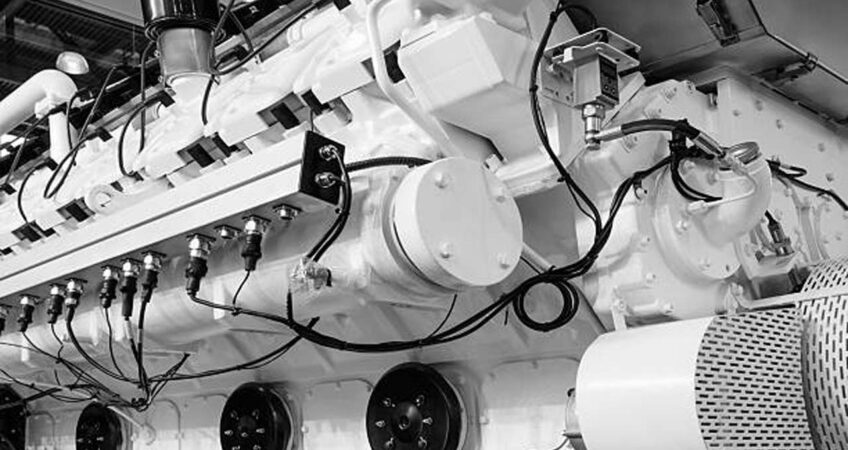
Operating two generators in parallel is a coordination task. Operating ten or thirty generators in parallel is a coordination task that human operators simply cannot achieve through manual operation with any accuracy. This is precisely the problem that ComAp smart control systems are designed to solve.
The automation of the process of coordination, load sharing and power management of various generators into one stable power supply system is performed by ComAp’s InteliGen and InteliSys paralleling controllers.
This paper considers real-life usage of ComAp smart control units for management of multi-generator installations, principles of load sharing and synchronization, and specific actions taken by such systems to minimize the chances of blackouts.
Why Multi-Genset Systems Need Dedicated Paralleling Control
A single standby generator is a straightforward control situation: starting, running, and stopping the generator. Multi-genset applications are a totally different story because each generator operating in parallel requires exact matching of frequency, voltage, and phase before being connected to a common bus and then the load sharing has to be balanced constantly between running generators.
If the paralleling control is not taken care of by a dedicated controller, then the risks involved include generators vying for load share, unstable frequency and voltage in the common bus, and, in a worst-case scenario, a generator going off-line due to an overload situation while the other generators are idle. This is where the InteliGen and InteliSys paralleling controllers from ComAp come into play.
How ComAp Handles Synchronization and Start-Up
Before any generator connects to the bus and starts sharing the load, the generator must be synchronized, which is achieved by matching frequency, voltage, and phase angle with the running system prior to closing the breaker. ComAp generators support various approaches to synchronization, including phase match and slip synchronization, ensuring that the output of each new incoming generator is automatically adjusted to closely match the system in order to allow for safe breaker closing without a sudden surge of energy.
Start-up synchronization feature provided by ComAp controllers is especially useful in case of large facilities using multiple gensets, as the start-up time of the system does not depend on the number of generators being used, making sure that two generators and thirty generators will require the same amount of time to get synchronized. Any generators that fail to start within its time frame are automatically taken out of the start-up process.
Load Sharing: Keeping Multiple Generators Balanced
Once synchronization and connection to the common bus have been accomplished, load sharing is what ensures that the generators remain synchronized to function as a whole under changing loads instead of going their separate ways. The ComAp controllers provide for two main types of load and VAr sharing: isochronous sharing over CAN bus communication and droop control, with an option for emergency droop sharing in case of loss of inter-controller communication.
The former, isochronous load sharing, controlled directly via CAN bus communication, allows for precise, proportional sharing of load between all generators currently working and also provides for maintenance of stable frequency of the system. On the other hand, droop control provides for the variation of the frequency in response to the changes in load as an alternative, inherently stable way of sharing the load without constant communication between controllers. Possession of both ways of sharing, and automatic transition to the emergency sharing in case of loss of inter-controller communication, means that there is some sort of system resilience built in – the load sharing becomes degraded instead of failing.
Power Management: Running Only What Is Needed
In addition to the load balancing among generators already in operation, the ComAp’s power management capabilities deal with another issue which generators need to be run at all, depending on the current demand. Unlike the scenario in which all generators in an installation keep running irrespective of the load, the power management system is capable of automatically switching on and off individual generators depending on certain criteria chosen by the user, thus increasing fuel economy and decreasing unnecessary running time of generators that are not required at all.
This is especially useful in the case of installations with varying load profiles, in which case keeping all the generators in operation 24/7 would result in unnecessary fuel consumption and premature wear and tear of generators that are not actually being utilized properly.
Reducing Blackout Risk In Practice
In facilities where uninterrupted power supply is essential, such as hospitals, data centers, banks, or manufacturing process plants, where an unexpected interruption could be disastrous, the blackout prevention capabilities of ComAp smart control systems are perhaps the most vital suite of features provided.
The AMF (Automatic Mains Failure) functionality is key in ensuring that when utility power fails, the generators come online immediately. The start-up synchronization will ensure that no matter what size of the system, the time it takes for the power to go up remains consistent, thereby reducing the time that the facility is without power in case of a blackout.
The dynamic spinning reserve functionality comes in handy when there are renewable energy sources integrated in the system, and there is a need to prevent the problem of having an unexpected capacity shortfall in case the power from the renewable source falls unexpectedly.
Peak shaving ensures that not too much power can be drawn from the utility mains at times of peak demand or high price, as this load is covered by the generator power. Though it is mainly done in order to manage costs better, in the course of such management, the system manages the balance of loads on the mains and generators in real time, which minimizes the chances of an emergency transition if the power supply from mains becomes insufficient.
Remote Monitoring and Fleet-Wide Visibility
The current generation of ComAp controllers goes beyond the on-site automation capabilities and provides the cloud monitoring possibilities via the WebSupervisor platform, as well as provides the possibility to connect remotely with the help of the AirGate technology provided by ComAp, making Internet access to the controller easy without any static IP or firewall changes required.
It is essential for plant engineers dealing with multi-genet plants and many different sites because instead of the need to personally check the state of the system or detect any problems, they can monitor the load sharing performance and generator status via the alarms of the system remotely.
Comparing Load Sharing Methods
Different load-sharing methods are used to coordinate generator sets and maintain stable system operation. The appropriate method depends on the required frequency regulation, communication setup, and system design.
| Load-Sharing Method | How It Works | Best Suited For |
|---|---|---|
| Isochronous (CAN) | Enables precise load sharing through direct communication between controllers | Systems requiring tight frequency regulation and accurate load balancing |
| Droop | Shares load by allowing generator frequency to vary slightly as load changes | Simpler systems or applications requiring a stable baseline load-sharing method |
| Emergency Droop | Automatically provides fallback load sharing when controller communication is lost | Maintaining load-sharing resilience during communication failures |
What Plant Engineers Should Evaluate Before Specifying a System
Several considerations will guide engineers toward selecting the appropriate ComAp controller solution for their multi-genset system.
Size of the system and capabilities of controller cooperation. ComAp controllers have restrictions when it comes to the number of gen-sets, mains and tie controllers they are capable of cooperating with, which can be from several up to 32 units per one, therefore, verification of a controller’s cooperation capacity vs. system size is important early in design phase.
Requirements of grid-connected or stand-alone operation mode. Stand-alone systems have different control requirements compared to grid connected or hybrid operation modes, therefore, ComAp offers different lines of controllers which are developed specially for each of such scenarios.
Engine type and communication protocols. For engines with electronic control units, it is very important to make sure that the controller selected is compatible with required communication protocol of a particular brand of engine being used.
Remote monitoring and fleet management requirements. In the case where a facility will have multiple locations, the analysis at the beginning stage will help determine what controller type and communication module would be appropriate for a certain installation.
Sourcing ComAp Controllers and Related Components
Jawaid Enterprises supplies ComAp intelligent control systems and other industrial control panel components required for genset paralleling systems. It is useful for engineers to determine the required controller type and configuration according to the size of their installation, engines used, and other parameters.
FAQs
What is the difference between isochronous load sharing and droop load sharing?
The isochronous method is characterized by CAN communication between controllers providing accurate and proportional load sharing while keeping frequency constant. The droop method involves slight changes in the frequency with a change in load; it is less sophisticated but more inherently stable because it doesn’t rely on communication between controllers.
How does ComAp smart control help avoid blackouts?
Several features of ComAp, including Automatic Mains Failure detection, synchronized start-up independent of the size of a system, and spinning reserve ensure that the facility doesn’t suffer from lack of power for too long during power failures and capacity variations.
Is it possible to use gensets from different manufacturers with ComAp?
ComAp controllers allow to synchronize gensets of different manufacturers provided they are able to support the communication protocols used by the controller.
What will happen if there is no communication between ComAp controllers during operation?
In cases where the systems have been equipped with the emergency droop feature, they automatically use it when communication between controllers becomes impossible.
Is ComAp smart control meant for only large multi-generators?
The company provides various types of controllers, both simpler ones, which are better suited for smaller multi-genset paralleling purposes, and highly complex ones that are able to handle larger facilities with complicated multi-genset and switchgear setups.
Automate Your Multi-Genset System With the Right Control Platform
To manage several generators efficiently, special paralleling control is necessary, rather than trying to manage the growing number of units manually. Jawaid Enterprises will assist you in finding and selecting ComAp controllers tailored to your facility’s specific paralleling requirements. Let us know about your system for an easy-to-understand suggestion.