
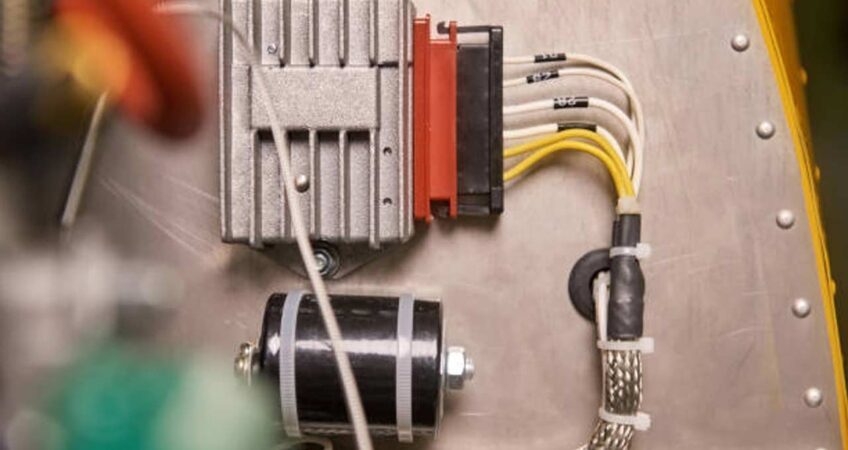
An ignition failure of a gas engine at a distant compressor station is not just an issue of repairs; such failures could result in loss of many hours and even days of production, while the technician takes time to reach the facility that was not designed for convenient servicing in the first place. And it was exactly this kind of scenario that Altronic gas engine ignition components were developed to solve: ignition of engines located in inconvenient locations where quick visits are impossible and reliable performance of the ignition system is essential for extended periods of time.
The purpose of this paper is to describe the approach of Altronic ignition systems to the field-reliability issues – to demonstrate not only how the ignition components function when tested in a laboratory environment, but to discuss how they perform in the real world conditions of remote wells, offshore oil and gas facilities, extreme temperatures and in explosive atmosphere where conventional industrial-grade equipment would fail.
Why Field Conditions Represent a Different Reliability Issue
When designing ignition systems to be used within controlled conditions, one is faced with a relatively simpler task as compared to designing for field applications. The engine operating in controlled conditions and having easy access to maintenance personnel can afford to have parts that require more maintenance. This does not apply to an engine operating in harsh climatic conditions or in offshore platforms.
The Altronic’s ignition system was designed with this particular issue in mind, that of ensuring that the parts perform efficiently under different ambient conditions, withstand vibration and thermal cycles and be easily maintainable in the field without having to send it back to the factory for maintenance.
Engineering Design Features to Ensure Field Reliability
There are a few design features in Altronic ignition systems that cater explicitly to the special requirements of operation in remote locations.
Modular design for easy field maintenance: Most Altronic ignition systems have a design wherein the electronics are housed in a removable back cover or module. The engineer servicing the ignition system in a remote site does not need to remove the entire ignition system from the engine, but can do maintenance right on the spot. It allows for quick turnaround time in such cases when downtime in remote sites can be a loss in production.
Self-powering design: Some of Altronic’s ignition platforms, like the Altronic III and III-NG series, come with the capability to draw self-power from the engine using a permanent magnet alternator. It reduces another point of failure in cases when an external source of energy may be unstable and unavailable. It will be useful for installations where a generator provides power and its supply is inconsistent.
Mechanical components that last long: The use of sealed ball bearings, a strong alternator, and synthetic elastomers for drivetrain coupling to reduce vibration are all part of the design considerations that make up durable mechanical components in an engine that works continually for many years before requiring maintenance. Vibration is one of the stresses that constantly affect engine performance when used in the field, where there is no vibration damping in the installation of the engine.
Hazardous location certification: Most Altronic components have certifications for Class I, Division 2 hazardous location usage, which is essential for gas compression plants and other oil field equipment operating in environments classified as potentially explosive. It is more than a regulatory certification; it represents components that were designed to be safe to use in such an environment.
Diagnostics: Detecting Field Issues before Shutdowns
In addition to increased reliability of Altronic’s ignition system, its more advanced systems offer diagnostic capabilities that play an extremely important role when it comes to servicing remote facilities where an engineer cannot walk up to the engine just to see what is going on.
Altronic NGI-5000, for example, offers ignition control per cylinder along with diagnostic parameters such as detonation and misfires displayed by the system. For an operator responsible for multiple remote engines, this feature allows detecting and dealing with potential issues before the ignition system fails completely, which would require an urgent visit to the site.
In other words, field servicing stops being strictly reactive (repair after the fact of breakdown) and becomes much more proactive – irregularities in combustion are detected early enough for the scheduled rather than urgent visit of an engineer. Such a difference is especially significant for organizations with engines located at different remote locations within a relatively large territory.
Enhanced Life Span of Components in Continuous Duty Operations
Reliability in field conditions is not only about endurance against adverse conditions but also includes the longevity of the components involved because each servicing session at a remote site requires spending both money and time on the process.
The capacitor discharge ignition system of Altronic, applied in the majority of ignitions offered by the company, is capable of substantially increasing the longevity of spark plugs as compared to the older inductive ignition systems. The cost savings will be minimal if the facility is easily accessible, but in case of remote installation, increased longevity means less frequent trips by the technician to perform the maintenance session.
The ignition accessories designed for continuous-duty operations by Altronic include the FLASHGUARD spark plugs and ignition cables that are able to withstand the conditions of industrial operation as opposed to standard automotive spark plugs and ignition cables.
Field Reliability Factors at a Glance
Factors: How It Supports Field Reliability
- Field-serviceable design: Technicians can repair on-site without factory return, reducing downtime
- Self-powered ignition: Reduces dependency on external power stability at remote sites
- Hazardous location certification: Ensures safe operation in explosive atmosphere-rated environments
- Combustion diagnostics (NGI-5000 and similar): Flags misfire/detonation issues before they cause full failures
- Extended spark plug life via CD ignition: Reduces frequency of technician site visits for routine maintenance
How This Applies to Operators Running Remote Engine Fleets
For operators utilizing gas engines in multiple remote settings – gas gathering systems, pipeline compression stations, oilfield artificial lift systems the impact of ignition system performance on their ability to maintain overall reliability may be somewhat underestimated until a problem occurs. A particular ignition component’s need for regular attention or unpredictable failures result not only in the replacement cost but also in travel time to the field, downtime of operations, and potentially the cascade effect of an engine trip on other pieces of machinery, such as compressors.
Selecting field-tested ignition components from the very beginning is one of those ways to minimize maintenance costs that are often overlooked when operating a distributed fleet of engines.
Procuring Altronic Ignition Components for Field Applications
Due to the fact that field reliability of any component of the ignition system depends on how well the component fits the engine in terms of the control system used and the operating environment, procurement process should take into account certification, power configuration and diagnostics among other factors.
For those managing gas engines in challenging conditions in the field, Jawaid Enterprises will provide you with authentic Altronic ignition systems and accessories according to the specific requirements of your engine, taking into account the conditions in which it works rather than simply the engine’s make and model. If you’re dealing with several engines at different remote sites, it is helpful to have a supplier who knows about the field-proven aspects of each Altronic line of products.
Keep Your Remote Engine Functioning with Altronic Ignition Systems
Ignition reliability is important for any application, but especially important for the field environment due to higher costs of every malfunction and additional costs of the technician traveling. Jawaid Enterprises can help you obtain original Altronic ignition systems and components suitable for operation in your particular field environment. Please provide the details of the engine and the environmental conditions for a quotati
Frequently Asked Questions
Why does the Altronic ignition system work better in remote locations than traditional ignition parts?
The design features of being field serviceable, self-powered, hazardous location rated, and having rugged mechanical parts helps overcome particular problems of reliability that occur in remote conditions, as opposed to convenient access for repairmen and constant power supply.
Is it possible to prevent ignition failures with diagnostics systems, or is it only possible to detect them earlier?
Advanced diagnostics systems such as the NGI-5000 can spot problems with ignition such as misfire or detonation in real time, which means that the operator can schedule repairs before the problem turns into a failure of the ignition system.
Are all the Altronic ignition systems using external power?
No, there are several types of ignitions such as the Altronic III and III-NG that use an internal permanent magnet alternator and don’t depend on external power supply stability.
How significant is the life of the spark plug when it comes to field maintenance costs?
Quite important, in case of remote use. Longer spark plug life will mean that there will be less frequency of the visits by the technician for maintenance of the engine, which means a bigger issue in terms of costs associated with field maintenance than the part itself.
Are Altronic ignition components suitable for use in explosive environments?
Many of the Altronic ignition components have Class I, Division 2 explosion-proof rating, which is required for equipment used in gas production and gas compression environments.