
A compressor station miles away from the nearest town. The engine idles for a Friday night. The only part you need, you don’t have on the shelf. Every hour of downtime costs money, and the nearest supplier is days away.
Sound familiar? You are not alone, and there is a solution. In this guide, you will find smart sourcing tips for Waukesha motors parts at remote gas compression stations. It will teach you what to stock, how to choose a supplier, and how to prevent sourcing delays.
Why remote gas compression stations need sourcing tips
A remote site is not a city, and an engine is not a car. You cannot pop into a parts store on your lunch break. There are several other challenges unique to remote gas compression stations.
- Long distance delivery extends lead time
- Difficult and seasonal terrain
- Limited personnel and staff to handle parts
- Cross-border delivery requirements
- Limited local suppliers that understand gas engines
Every hour of lost compression equals lost revenue. That is why sourcing gas engine parts requires as much planning as engine maintenance. In the next section, we will look at how to determine exactly what parts you need.
Learn about your engines to avoid sourcing delays
Waukesha gas engines come in many sizes. Similar-looking parts will often not be interchangeable. To avoid sourcing delays, always know what kind of engines you have and what they need.
For every engine, make sure you have the following information on file:
- Model and series
- Engine serial number
- Speed and horsepower rating
- Fuel type and gas specification
- Ignition and control system type
- Running hours and last overhaul
It is good practice to take a digital photo of each engine’s nameplate. Store this information in a shared file that your field service team can access. It will save time when requesting a quote or verifying a received part against the P/N database.
Why gas specification matters for your parts
Not all gases are equal, and the gas at a field site is likely to be far more challenging than what you find in a gas station. For example, sites that process sour gas must deal with corrosive byproducts like hydrogen sulfide. Other sites may have to deal with condensate, liquid hydrocarbons, or fluctuating BTU content.
Gas specification will dictate the materials of construction for many parts. Always let your Waukesha motor parts supplier know the conditions at your field site. It will ensure that you always get the right materials for the job. A standard valve may be suitable for a demo engine, but a field engine may require something much more resistant.
Creating a spare parts list for your gas compression equipment
Your remote site cannot stock everything. Parts can be expensive and highly specialized. The trick is to know what to stock. There are three categories of parts that every gas compression site should have:
- Critical parts
- Important parts
- Routine parts
Critical parts are those that will cause an engine stoppage if they fail. For these parts, you should always have at least one spare on the site. Important parts are those that will reduce engine performance or necessitate a scheduled stoppage. For these items, order based on lead time. Routine parts are things like filters and engine oil. You should have enough on the site to perform the recommended service interval. A few examples of each category are listed below:
Part Category Examples
| Part Category | Common Examples |
|---|---|
| Ignition Components | Spark plugs, ignition coils, leads, and ignition modules |
| Filters & Fluids | Oil, fuel gas, and air filters; approved engine oil and coolant |
| Sealing Components | Gasket sets, O-rings, seals, and valve cover gaskets |
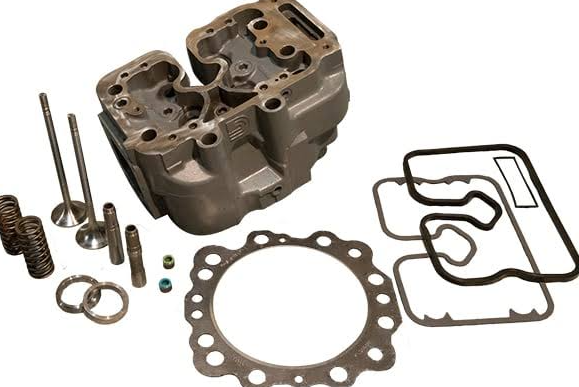
| Top-End Components | Valves, valve seats, guides, springs, and rocker arms |
| Fuel & Air Components | Regulators, carburetors, and mixer kits |
| Sensors & Controls | Temperature, pressure, and speed sensors; control module spares |
| Cooling & Drive Components | Belts, hoses, thermostats, and water pump parts |
Another good way to prioritize is to organize your parts by lead time. You should always have at least one spare on the shelf for anything with a lead time of more than a week. Ask your supplier to give you realistic lead times for the parts you need. Based on this information, you can decide what to stock and what to order on an as-needed basis.
Organizing your gas engine parts by type is also a good way to prioritize. Use this table as a guide:
Part Group Examples to Stock
| Part Category | Common Examples |
|---|---|
| Ignition Components | Spark plugs, ignition coils, leads, and ignition modules |
| Filters & Fluids | Oil, fuel gas, and air filters; approved engine oil and coolant |
| Sealing Components | Gasket sets, O-rings, seals, and valve cover gaskets |
| Top-End Components | Valves, valve seats, guides, springs, and rocker components |
| Fuel & Air Components | Regulators, carburetor kits, and mixer parts |
| Sensors & Controls | Temperature, pressure, and speed sensors; control module spares |
| Cooling & Drive Components | Belts, hoses, thermostats, and water pump parts |
Order based on running hours
Gas engines require regular maintenance based on running hours. Use your maintenance schedule as a guide. If your engine is due for a major service overhaul in six months, you should be ordering the required spare parts now. Parts that have a long lead time should always be ordered well in advance. This prevents costly and time-consuming expedited shipping charges.
You can use a spreadsheet to keep track of parts based on the number of hours your engine runs. Once you input your maintenance schedule, the spreadsheet will calculate what you need to order. This makes it much easier to order parts in bulk rather than one-off pieces.
Smart sourcing strategies that minimize downtime
In addition to a spare parts list, you should also consider these smart sourcing strategies to help you avoid downtime and keep your inventory costs under control.
- Order overhaul kits
- Regional stock
- Standing orders
- Shared spares
- Supplier agreements
These sourcing tips will help you get the most value out of your inventory. You can decide which strategies to employ based on your budget and risk tolerance. Even one or two of these sourcing strategies can help reduce your downtime.
How to choose a reliable Waukesha motor parts supplier
There are several things to consider when choosing a supplier. Not all Waukesha motor parts suppliers are created equal. Here are some questions to ask before you commit:
- Can they verify the correct part number for your engine?
- Can they provide information on the origin and quality of the parts?
- Do they have a warranty and return policy?
- How quickly can they ship the parts to your location?
- Do they handle and clear export documentation?
- Can they assist with technical questions over the phone?
- Do they package the parts to withstand rough transit conditions?
A good supplier will be able to answer these questions. Their answers will indicate their level of professionalism. In general, the faster they respond, the more competent they are likely to be.
Genuine vs OEM equivalent vs aftermarket: What’s the difference?
When ordering Waukesha gas engine parts, you will often have to choose between genuine, OEM equivalent, or aftermarket. Here is a breakdown of the differences:
- Part Type Description
- Genuine Made by the manufacturer
- OEM Equivalent Similar quality and specifications, may vary by brand
- Aftermarket Lower cost, may have lower quality
Genuine parts provide best value for money, but they can be expensive. OEM Equivalent parts offer similar performance at a lower cost. Aftermarket parts can offer significant cost savings, but you should research specifications and warranty terms carefully.
For critical engine parts, it is best to go with OEM Equivalent or higher. A cheap piston ring or bearing can do more harm than good. For other parts, such as filters and engine oil, a good aftermarket equivalent can be a great cost-saving measure. Always ask your supplier to provide specifications and warranty information.
Avoiding poor-quality and counterfeit parts
Counterfeit and substandard parts are a serious problem in the industrial parts market. These inferior parts can damage your engines and lead to costly downtime. To avoid low-quality parts, you should:
- Only buy from reputable suppliers
- Always check packaging, markings, and part numbers
- Always compare new and old parts
- Always keep documentation and batch information
- Never buy parts that seem too cheap
By following these simple steps, you can protect your engines from poor-quality and counterfeit parts.
Logistics tips for remote gas compression stations
Even the best-sourced parts are useless if they never arrive. Sourcing tips for remote gas compression stations should always consider the local terrain and weather conditions. Here are some logistics tips that every field service manager should know.
Ship to a specific address
Always make sure you ship the parts to a specific address. Give the supplier precise GPS instructions if possible. Always name a responsible contact person that can accept delivery. Delays in receiving parts can cause serious downtime.
Pack parts for rough transit
Make sure the supplier uses appropriate packing materials. Fragile parts such as sensors and ignition coils need extra protection. Ask your supplier to use moisture-proof packaging. This is especially important in humid or rainy climates.
Order in advance if you have seasonal weather
Monsoon rains, snow, and ice can all make the road impassable. Always place orders well in advance of the bad season. It is also a good idea to build a buffer stock for the off-season. This way, you will always have parts available even if delivery is delayed.
Prepare documents for customs clearance
If you have to clear parts through customs, make sure all the required documentation is in order. This will prevent costly delays at the border. Always make sure the product descriptions and declared values are accurate.
Track your logistics
Make sure your Waukesha motor parts supplier provides tracking information. It is always a good idea to share tracking and delivery information with the field service team. That way, they can plan the installation or repair window accordingly.
Common sourcing mistakes to avoid
Here are some common sourcing mistakes that field service managers make:
- Only specifying the engine type and not the serial number
- Only finding a supplier after a part has failed
- Specifying substandard parts with no regard for quality
- Failing to budget for long lead time parts
- Not taking local weather into account when scheduling deliveries
- Failing to document parts inventory, leading to excess or deficient stock
These are all easy mistakes to make, but they are also easy to avoid. Just make sure to follow your sourcing plan and always document your parts management procedures. Avoiding these common mistakes will save you time, money, and headaches.
Remote gas compression stations: Climate and terrain matter
Field gas engines and parts are subject to extreme weather conditions. Hot desert nights, sub-zero arctic temperatures, and humid tropical climates all take a toll on gas engines and their parts. Sourcing tips should always take these environmental conditions into account.
Cold weather sites may require special parts that are not available in warmer climates. Hot climates may require more frequent maintenance and special cooling parts. Humid climates may require special storage conditions for certain parts. Let your Waukesha motor parts supplier know about your local climate so that they can recommend the right parts for the job.
The importance of proper documentation
Proper documentation can be the difference between an engine that runs and one that doesn’t. Create a simple file for every engine that shows the following information:
- Photos of the engine nameplate
- Parts used and their P/N
- Service and repair records
- Supplier information
This will make it much easier to identify the right parts if a failure ever occurs. It will also help you keep track of which parts are wearing out faster than expected. Over time, this information will help you optimize your spare parts list.
Make sure to share this file with your supplier and your field service team. That way, everyone has the information they need to keep your gas compression stations running smoothly.
Maintaining an organized parts room
Even the best-sourced parts are useless if they cannot be found. An organized parts room is essential, especially for remote gas compression stations. Here are some tips to help you get started:
- Clearly label all shelves and bins
- Store parts in a controlled environment
- Keep gaskets and seals away from heat and direct sunlight
- Keep a log of all parts and their quantities
- Keep the parts room clean and organized
These simple steps will help you keep track of your inventory and avoid costly downtime due to missing parts.
Reduce your demand for parts through good maintenance
The best way to reduce your demand for parts is to have a good maintenance program in place. Here are a few maintenance tips that will help you extend the life of your parts and reduce your downtime:
Follow the recommended service schedule
- Use the recommended engine oil and coolant
- Test and monitor the engine coolant and oil regularly
- Keep detailed service records
- Train your field service team to spot potential problems
Condition monitoring can be an excellent way to reduce parts demand. By trending temperatures and pressures, you can often predict failures before they occur. Monitoring misfire rates is also a good way to catch potential problems early.
Safety and compliance
Gas engines present unique safety challenges due to the flammable nature of the fuel. There are several safety and compliance procedures that should be followed when servicing gas engines:
- Lockout/tagout procedures for gas engines
- Gas engine leak testing before hot work
- Compliance with local safety regulations
- Proper training for field service personnel
Gas engine work should always be done by qualified and certified personnel. Hot work on gas engines should only be performed by trained technicians.
Frequently Asked Questions
What Waukesha motors parts should I always stock?
Always stock the basic ignition parts, filters, and gaskets. Order critical spares based on lead time. Your engine type and gas specification will dictate what you need to stock.
How do I identify the correct part number?
Always specify the engine model and serial number when requesting a quote. Double-check the part number with a photo of the nameplate and the old part. Ask your Waukesha motor parts supplier to confirm the part number before delivering the goods.
Are aftermarket parts safe to use?
It depends on the part and the supplier. Use reliable aftermarket parts for non-critical components. Always ask your supplier for quality and warranty information.
How far in advance should I order overhaul kits?
Order as early as possible. Many sites order overhaul kits several months in advance of a scheduled overhaul. Ask your supplier about realistic lead times.
Can Jawaid Enterprises help me with sourcing parts for my remote site?
Of course! Tell us your engine model and serial number and the delivery address. We will help you find the right parts and make the necessary arrangements.
Conclusion
Remote gas compression stations require special sourcing considerations. Know your engines, know your gas quality, and stock critical spares. Choose a reliable supplier and make sure to consider weather conditions when delivery scheduling parts. Keep your parts room organized and maintain your engines regularly. With these simple sourcing tips, you will be able to minimize downtime and maximize productivity at your remote gas compression stations. If you need parts, quotes, or sourcing assistance, contact Jawaid Enterprises today. We will help you find the right parts for your Waukesha gas engines.
Need Waukesha motors parts? Contact Jawaid Enterprises at jawaidenterprises.com today.