
Ignition timing is a compromise, not something that can be set and forgotten. Advanced too far and efficiency is gained until knock occurs, retarded too far and knock risk is reduced but thermal efficiency falls and NOx and fuel burn rates go off in different directions depending on the direction of adjustment. On a Waukesha VHP engine running variable field gas, achieving this combination on a consistent basis across all cylinders and as gas content and load change is precisely what Altronic LLC digital ignition platforms were developed to address.
This white paper discusses how Altronic ignition tuning works in practice on Waukesha gas engines, the combustion dynamics behind the adjustments and why tuning an engine for specific combustion characteristics using digital ignition combined with Waukesha genuine parts offers far better combustion performance than either alone
The Physics Behind the Timing Tradeoff
The basis for understanding why ignition timing is important is understanding why changes to timing have the effects they do. In general, advancing timing (i.e. making the spark occur closer to the top of the piston stroke) improves thermal efficiency. This occurs because the combustion phasing is shifted closer to top dead center (TDC), thereby allowing more of the energy from combustion to be converted into useful work, rather than being lost in the exhaust or elsewhere. However, advancing the timing also raises in-cylinder temperatures and pressures, which raises NOx emissions and increases the risk of knock.
knock, also called detonation, is a destructive abnormal combustion process that can cause catastrophic failure of the piston, piston rings, and/or cylinder head. As a result, retarding timing (i.e. delaying the spark relative to TDC) decreases knock risk and NOx emissions while sacrificing some thermal efficiency.
This is why timing is generally a compromise between efficiency and emissions, rather than one or the other. For example, a given engine has a certain amount of spark advance (i.e. how far the spark is advanced relative to TDC, measured in degrees of crankshaft rotation) that delivers the highest torque for a given load while maintaining acceptable knock margins and NOx levels.
While finding this point for a single-cylinder test engine may be challenging enough, doing so becomes exponentially more difficult for a multi-cylinder Waukesha VHP engine that burns variable-composition field gas.
Why Waukesha Engines Face a Harder Tuning Problem
Waukesha VHP engines are designed to burn field gas, digester gas, and other variable-composition fuels, making the need to optimize ignition timing even more important. Unlike a pipeline-gas-fed engine, there is considerable variation both between and within cylinders in a field-gas engine, which makes finding an ignition timing that is suitable for all of them challenging. At the same time, Waukesha VHP engines typically employ rich-burn combustion, which presents other challenges compared to lean combustion.
First, because rich-burn engines typically operate with a significant amount of excess air (which lowers combustion temperatures), three-way catalytic converters are typically used to reduce NOx rather than diluting the exhaust with inert gas as in some other rich-burn engines. As a result, there is a greater range of ignition timing that can lead to unacceptable peak temperatures for the catalyst, requiring more careful tuning to maintain catalyst light-off. Second, because of the potential for variations in fuel composition, the relationship between engine load and ignition timing may subtly change from one cylinder to the next, or even within a single cylinder over time. Both of these issues are best addressed with per-cylinder digital ignition control.
How Altronic Digital Ignition Addresses This Directly
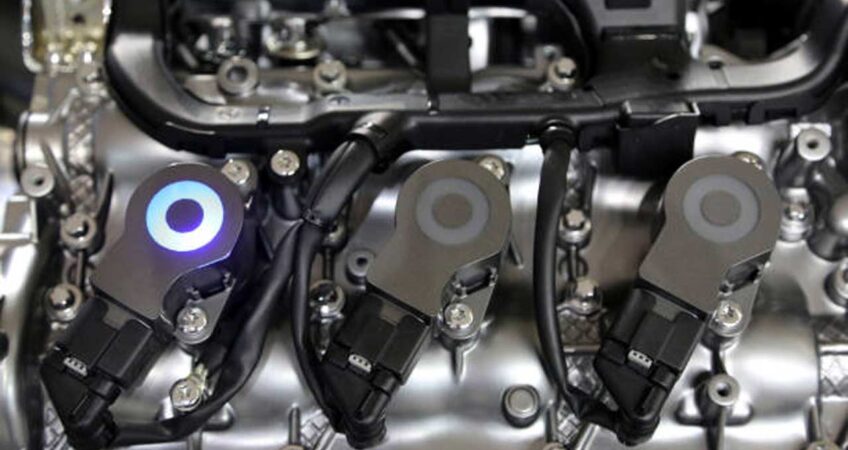
Altronic’s digital ignition platforms, including the advanced NGI-5000 product line, offer precisely the sort of flexibility that Waukesha VHP engines need. These platforms offer per-cylinder ignition timing control, while also providing detonation and misfire detection information that can be used to optimize timing for each cylinder. Essentially, they allow operators and technicians to take advantage of every opportunity to improve efficiency while still maintaining adequate knock margins.
This can be extremely valuable for a Waukesha VHP engine, which may see significant variations in fuel composition from one cylinder to the next. By detecting when a given cylinder has room for more efficiency (i.e. less spark advance required to maintain knock margins), the timing for individual cylinders can be advanced for greater efficiency. Similarly, if detonation risk increases for a particular cylinder (e.g. due to a localized hot spot or a change in fuel composition), the spark for that cylinder can be retarded to reduce risk without sacrificing too much efficiency. This is much harder to accomplish with a simple single-programmable ignition controller that uses the same timing curve for all cylinders.
Meanwhile, Altronic’s CD200 series offers similar flexibility but at a lower price point for smaller Waukesha VHP engines. The CD200 offers built-in configurable timing curves, while also allowing the ignition energy to be modulated to provide the flexibility and responsiveness needed for tuning.
Why Genuine Waukesha Parts Matter Alongside Tuning
It should not be surprising that proper ignition timing is critical for maximizing efficiency and minimizing emissions, but it is only one part of the equation. For a Waukesha engine, it is important to recognize that ignition tuning is part of a larger optimization process that includes proper combustion hardware as well. This is because the performance of the engine is ultimately determined by the interaction between the fuel, air, and combustion hardware, with ignition timing serving to optimize that interaction. As such, worn valves, incorrect spark plugs, and other combustion hardware issues can diminish the value of more precise ignition timing.
For example, a spark plug with incorrect heat range or electrode gap will have different performance characteristics than a stock NGK plug, which may make it more or less resistant to fouling and misfire. Similarly, incorrect or worn cylinder and valve hardware can cause differences in the combustion chamber geometry and valve timing that can affect the optimum ignition timing for a given cylinder. In short, proper tuning requires considering these factors as a system, as a set of worn or incorrect parts may actually reduce the value of ignition tuning by “moving the optimum point” relative to the timing curve. It should also be noted that the combination of precise tuning plus worn hardware will deliver less value than a combination of less precise tuning and new hardware. In essence, the two should be considered together as part of a larger optimization process.
Combustion Outcomes: What Proper Tuning Actually Delivers
Ignition timing affects fuel efficiency, emissions, and combustion stability in gas engines. The appropriate timing strategy depends on engine design, fuel quality, operating conditions, and knock limits.
| Ignition Timing Condition | Efficiency Impact | Emissions & Knock Impact |
|---|---|---|
| Over-Advanced Timing | May improve thermal efficiency within the engine’s operating limits | Can increase NOx emissions and knock risk |
| Over-Retarded Timing | Reduces thermal efficiency and may increase fuel consumption | Generally lowers NOx emissions and increases knock margin |
| Static, Non-Adjustable Timing | Uses a conservative setting to accommodate the most demanding operating conditions | Helps protect against operating variability but may leave some efficiency potential unused |
| Per-Cylinder Digital Tuning (Altronic) | Allows efficiency optimization where operating margins permit | Helps manage knock risk on individual cylinders without unnecessary system-wide timing retard |
Practical Steps for Optimizing Waukesha Combustion Through Ignition Tuning
There are a few best practices that should be followed to maximize the value of ignition tuning for Waukesha engines.
First and foremost, it is important to remember that the value of tuning is largely derived from the ability to adjust ignition timing for varying conditions from one cylinder to the next and over time. As such, it is critical to make use of the diagnostic data provided by a digital ignition platform (such as NGI-5000’s detonation and misfire information) to inform the tuning process. This information should be used regularly as part of a routine maintenance procedure, rather than waiting for an issue to arise.
Second, it is critical to ensure that tuning efforts reflect changing fuel conditions. In particular, it is important to understand that ignition timing is closely linked to the fuel properties, particularly the Wobbe Index and methane number. As such, it is important to update tuning parameters when switching between different fuel sources.
It is also important to make sure that other combustion-related hardware is not limiting the ability to achieve the desired outcomes from ignition timing, especially when trying to capture efficiency gains. This means verifying that spark plugs, valves, and other hardware are in good condition and appropriate for the engine.
Finally, it is important to avoid chasing efficiency gains by advancing timing unnecessarily, especially on rich-burn Waukesha engines. This is because rich-burn engines operate with a three-way catalyst that must be maintained within a narrow temperature window. As such, there is a practical upper limit on how much timing can be advanced before the risk of excessive NOx production increases substantially.
Sourcing Altronic Ignition Systems and Genuine Waukesha Parts
Jawaid Enterprises can help you source the Altronic ignition control systems you need for your Waukesha VHP engines. We specialize in supplying genuine Waukesha gas engine parts and Altronic CD200 and NGI-5000 digital ignition platforms that are right for your application. We can help you select the digital ignition control system and combustion hardware that will deliver the most value for the application. Simply contact us with questions or provide the technical specifications for the equipment you need to support.
Frequently Asked Questions
How does ignition timing affect fuel efficiency on a gas engine?
Advancing timing generally improves thermal efficiency in a gas engine, but only to a point. The main reason for this is that advancing timing shifts the combustion phasing closer to top dead center (TDC), which causes more of the energy from combustion to be harnessed as useful work. However, it also increases peak in-cylinder temperatures and pressures, which increases knock risk and NOx emissions.
Why do Waukesha VHP engines benefit particularly from per-cylinder ignition tuning?
This is because Waukesha VHP engines are typically used to burn variable-composition field gas rather than cleaner-burning pipeline gas. This means that there can be substantial variation in the optimum timing from one cylinder to the next. In addition, Waukesha VHP engines typically use rich-burn combustion, which means that NOx control is more challenging than with some other engine types. Both of these issues are addressed much more effectively with per-cylinder ignition control.
Can worn spark plugs undermine a properly tuned ignition system?
Yes, to a certain extent. Spark plugs are an integral part of the combustion process, which means that changes to spark plug performance characteristics can affect combustion in ways that are difficult to predict. This may affect the value of tuning efforts, especially if the spark plugs in use are not compatible with the ignition system.
Does ignition tuning alone reduce NOx emissions on rich-burn Waukesha engines?
Ignition timing has a significant effect on NOx emissions, but it is unlikely to be sufficient on its own for rich-burn Waukesha engines. This is because those engines typically use three-way catalysts for NOx control, which requires operating within a narrow temperature range. As such, ignition timing adjustments should be made with care to avoid exceeding this range.
How often should ignition timing be reviewed on a field-gas engine?
It depends on a variety of factors, but it is generally a good idea to review ignition timing on a field-gas engine whenever there are substantial changes to the fuel composition. In addition, tuning should be reviewed regularly as part of a routine maintenance procedure, rather than waiting for issues to arise.
Optimize Combustion With Precision Ignition Tuning and Genuine Parts
To get the most out of a Waukesha gas engine, it is important to consider ignition tuning and combustion hardware as a system, rather than two separate issues. Jawaid Enterprises can help you source the genuine Altronic ignition tuning solutions and Waukesha parts you need. We can help you determine which solutions are right for your engine. Simply contact us with any inquiries or provide the technical specifications for the equipment you need.