
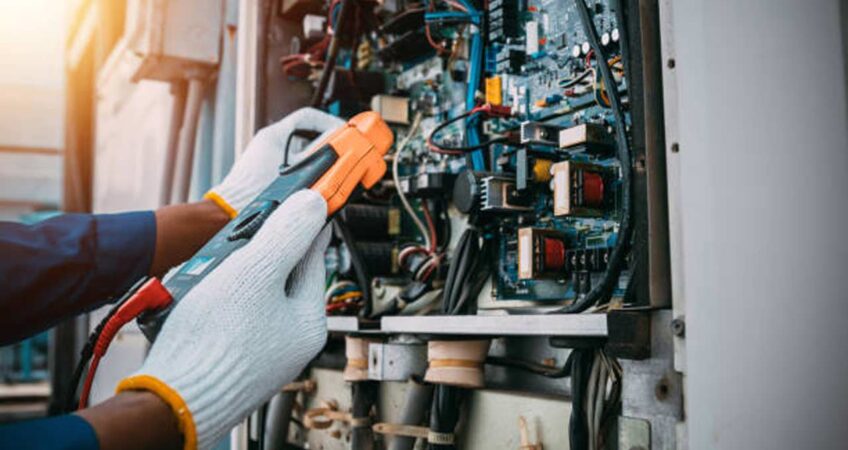
A couple of ohms of superfluous resistance in a wiring joint may not seem like much, but add up those inefficient few ohms over several years of operation, during which the plant has numerous sensors, control circuits, and starter systems, and you will see how real that expense is. Industrial electrical equipment does not simply turn devices on and off. It controls the efficiency with which an engine burns fuel for output and the amount of heat energy lost due to poor-quality joints. Moreover, it defines the amount of unscheduled maintenance work caused by a poorly performing part.
This article focuses on electrical parts and their impact on industrial efficiency: energy loss from poor-quality electrical parts, the operational costs associated with poor-quality electricity, and priorities in selecting industrial electrical equipment for engines and generator systems.
Where Electrical Inefficiency Actually Comes From
Electrical component efficiency losses generally do not come to light through one spectacular moment but through the aggregation of multiple smaller factors over time.
Resistance losses caused by undersized and worn wiring. All electrical connections have some resistance, which is responsible for converting a part of the electrical energy supplied into heat energy instead of mechanical. The undersized and deteriorated condition of the wiring causes the level of resistance to be significantly higher than the one intended by design, which means more energy gets wasted before reaching its destination component. In the case of long wiring used in industrial applications, the losses may grow over time due to vibration and temperature changes.
Sensor drift impacting control accuracy. Advanced industrial engines use sensors as a way of regulating parameters of fuel input, ignition timing, and the air-fuel mixture in real time. Drifted out of calibration, a sensor will still work but will provide erroneous readings, resulting in the engine running at suboptimal setpoints without causing a fault. It may take months before anyone realizes that the fuel consumption rate has been slowly increasing due to inefficiency.
Voltage drop under load. Insufficiently rated components or inadequate wiring can cause a voltage drop under load, which results in decreased efficiency of motors, actuators, and control devices by lowering the power supplied to them. As such, this phenomenon causes decreased performance precisely when maximum performance is expected during startups, peaks, or emergency situations.
Power quality problems caused by poor components. Substandard equipment with inconsistent or “noisy” power output can lead to interference of neighboring sensors and control devices, causing further degradation of performance through a cascading effect.
The Efficiency Cost of Cutting Corners on Electrical Equipment
It may be tempting to look at electrical components as a less important sourcing category when compared to other mechanical components like a piston or a turbocharger. However, the efficiency equation tells a very different story when all of the factors are taken into account.
A plant using tens of sensors and controls on a number of engines suffers from poor-quality electrical components not additively but multiplicatively. For example, a wiring harness made of poor-quality conductor or lacking insulation will cost less up front; however, if such a wiring harness results in increased energy loss through resistance over a long period of time, it will end up costing the company more than what was initially saved on purchasing them.
This is further accentuated by the cost side of maintenance as well. Poor quality electrical components are prone to failures that result in labor costs as well as time taken for the diagnosis and sourcing of spare parts. Unlike the case with mechanical components where one can chart out their wear pattern, there is unpredictability with regard to electrical component breakdowns, and this makes poor quality electrical infrastructure more prone to disruptions during maintenance.
Industrial Electrical Equipment Categories and Their Efficiency Role
Electrical components play an important role in reliable engine operation, accurate control, and efficient performance. Faulty or poorly matched components can create electrical losses, inaccurate control inputs, and operating instability.
| Component Category | Efficiency Role | Common Efficiency Risk |
|---|---|---|
| Wiring & Connectors | Deliver power and signals with minimal electrical loss | Resistance losses caused by corrosion, undersized wiring, or poor connections |
| Sensors (Temperature, Pressure, Speed) | Provide accurate data for real-time engine control adjustments | Sensor drift can cause inefficient fueling or timing without always triggering a fault |
| Control Panels & Relays | Manage switching, monitoring, and control functions | Inconsistent switching, false triggers, or delayed fault detection |
| Starting & Charging System Components | Support reliable engine startup and electrical system stability | Voltage instability can affect startup performance and reduce component life |
Practical Steps to Protect Electrical Efficiency
There are some sourcing and maintenance practices that actually guard against the inefficiencies of the silent type discussed above.
Make sure that your wiring is sized to handle your peak loads. Wiring that is sized only to handle the average current load will show voltage drop at the times when peak or startup loads are experienced exactly when you need full performance. Making sure that your wiring is sized to match your peak current load prevents this problem from happening.
Make sure that calibration is checked during maintenance work. Sensor drift is not going to generate a failure message. Proactively calibrating your system during planned maintenance prevents these problems from developing until later.
Check the connections, not just the sensors and relays. A perfectly fine sensor or relay that is being operated via a poor connection is not going to deliver full performance either.
Do not simply assume that the least expensive electrical components will do for continuous duty. In equipment that operates almost continuously, the accumulated efficiency loss of the less efficient electrical components adds up quickly throughout the equipment’s lifespan. The more efficient electrical component is the more economical choice despite being initially more expensive.
Do not wait for total failure; keep an eye out for efficiency degradation. Monitoring fuel use, performance, and controls over time may show how efficiency gradually falls due to degraded electrical components.
Why This Matters Across an Entire Industrial Operation
While inefficiency in a single engine might result in a small rise in fuel usage or an increased maintenance interval, this inefficiency, when multiplied by a facility that employs several engines, generators, and compressors operating around the clock, leads to a substantial increase in operational costs, which goes unnoticed since it does not result in any particular breakdown.
This is why sourcing of industrial electrical equipment should be considered as important as sourcing of other components of industrial machines. The effect on efficiency will not depend on the size and cost of each particular piece of equipment, but rather on its efficiency during all the years of operation.
Sourcing Quality Electrical Equipment for Industrial Engines
Jawaid Enterprises offers electrical equipment for industrial engines, including wiring elements, sensors, control panels and other equipment that is able to provide efficiency during many years of operation. When dealing with continuous-duty engines and generators, it is essential to pay attention to the quality of the electrical component.
Frequently Asked Questions
Does faulty wiring actually impact fuel efficiency?
In a way, it does. Energy losses in faulty wiring result in heating losses rather than delivering energy to the component it should go to, and if wiring serves sensors or other control devices, it may affect the results and make your engine operate not at the optimal set point and use more fuel because of it.
How can I tell whether sensor drift affects my engine’s performance?
Sensor drift rarely sets off any fault, so you need to look for any trends in the fuel usage and engine’s performance over time and make sure that calibration of sensors is included into your regular scheduled maintenance procedures rather than relying on the fault codes.
Is it worthwhile to pay extra money for better quality industrial electrical equipment?
Generally, yes, if it is used continuously. The combined efficiency costs caused by resistance losses, drift of sensors, and increased failures of inferior parts usually outweigh the initial price difference.
What is the most underplayed source of electrical inefficiency in industrial plants?
Connections are often ignored when it comes to efficiency, but even a top-notch part connected through an unreliable connection, whether that connection is rusted, loose, or under-sized, will produce inferior results despite the good condition of the part itself.
Do poor electrical components have any other effects on equipment?
Sure. Poor electrical components do not only reduce efficiency; they also have an influence on control, startup reliability, and general system protection, as many safety measures rely on accurate electrical performance of the system.
Protect Efficiency With the Right Electrical Equipment
Efficiency of electrical components in industrial plants can be overlooked because of their hidden nature, but it does not mean that it doesn’t exist. Let Jawaid Enterprises provide you with industrial electrical components that will protect your efficiency and reliability. Please provide us with the information about your equipment and components you need.